
The Theogony by Hesiod
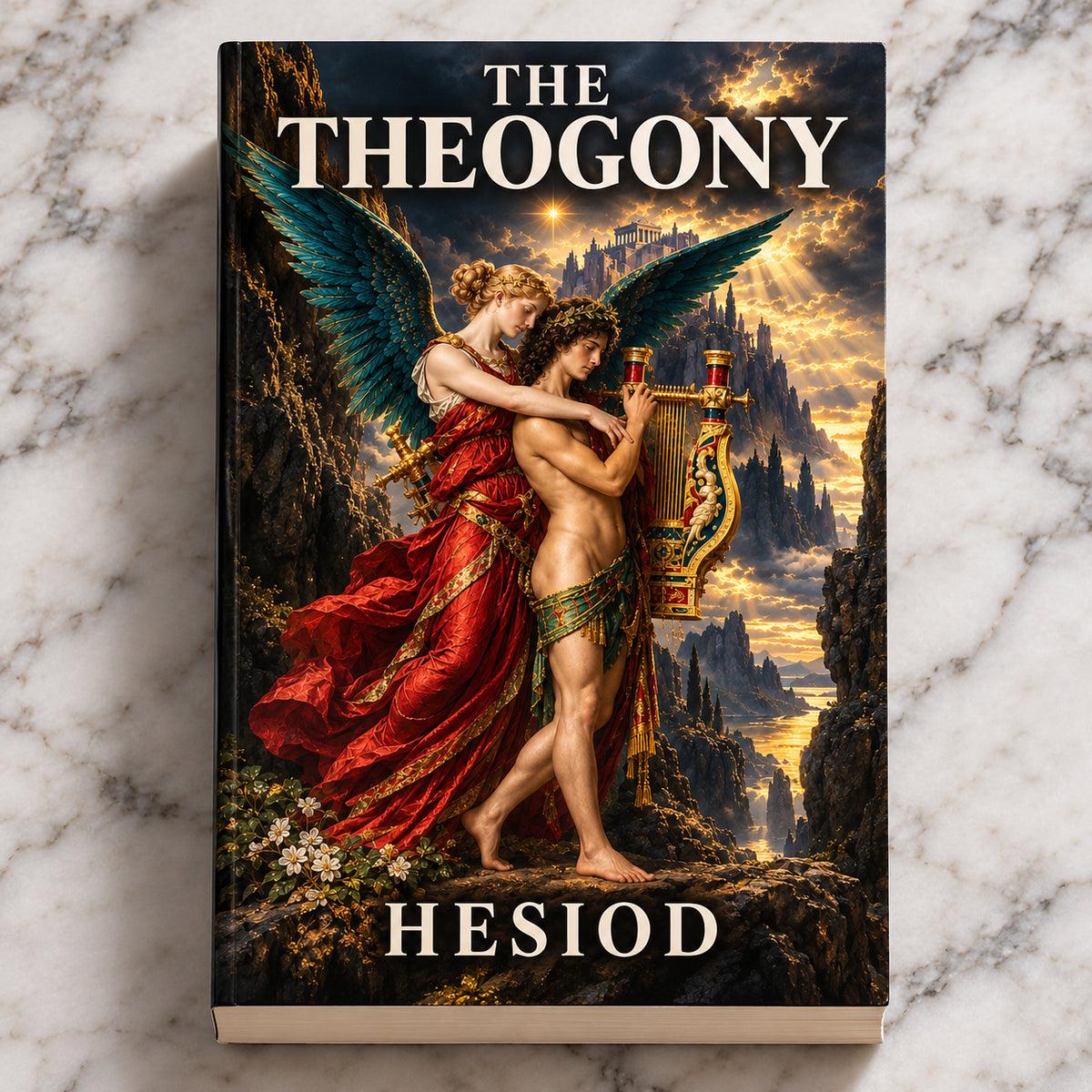
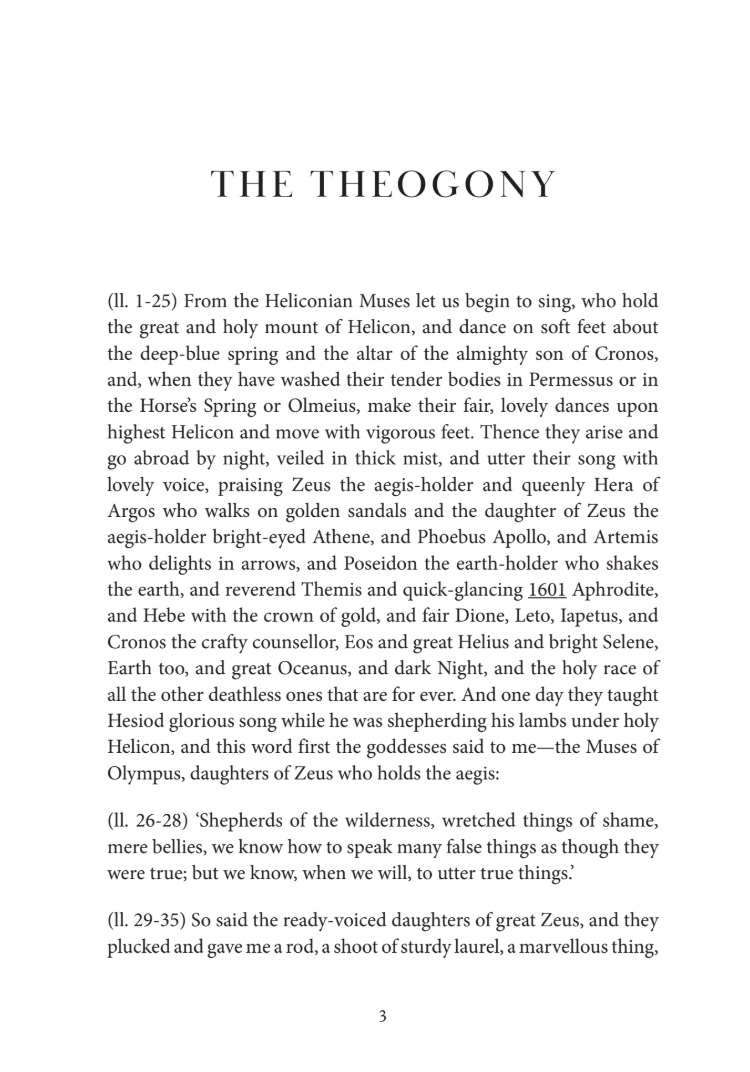
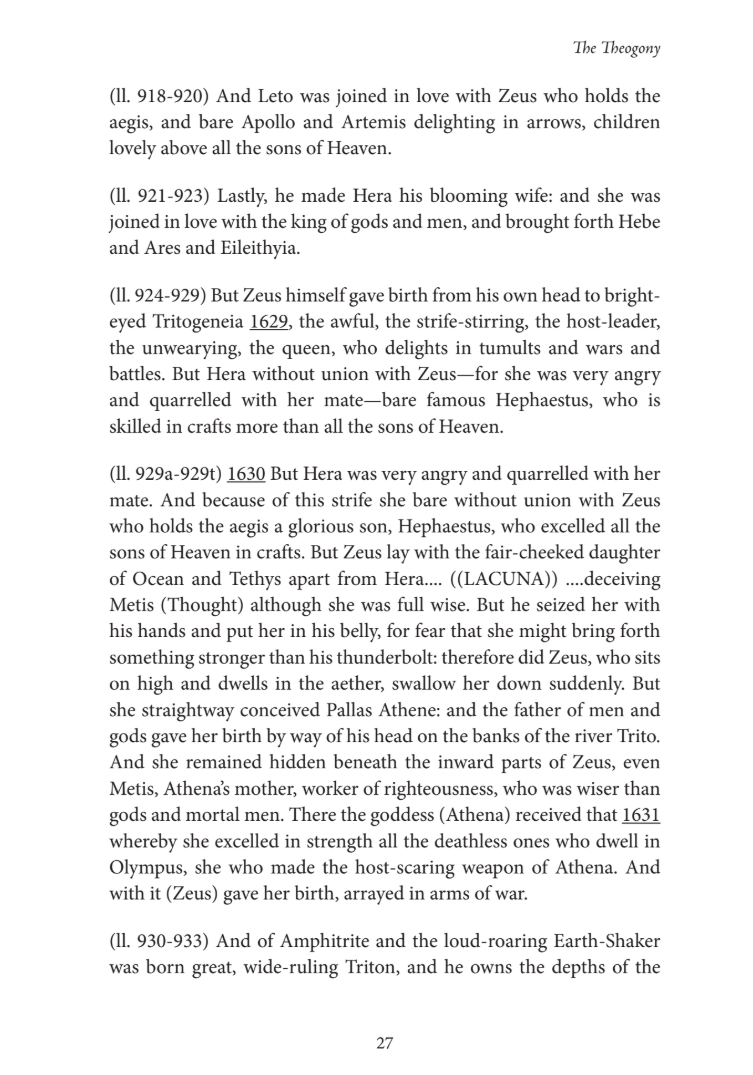
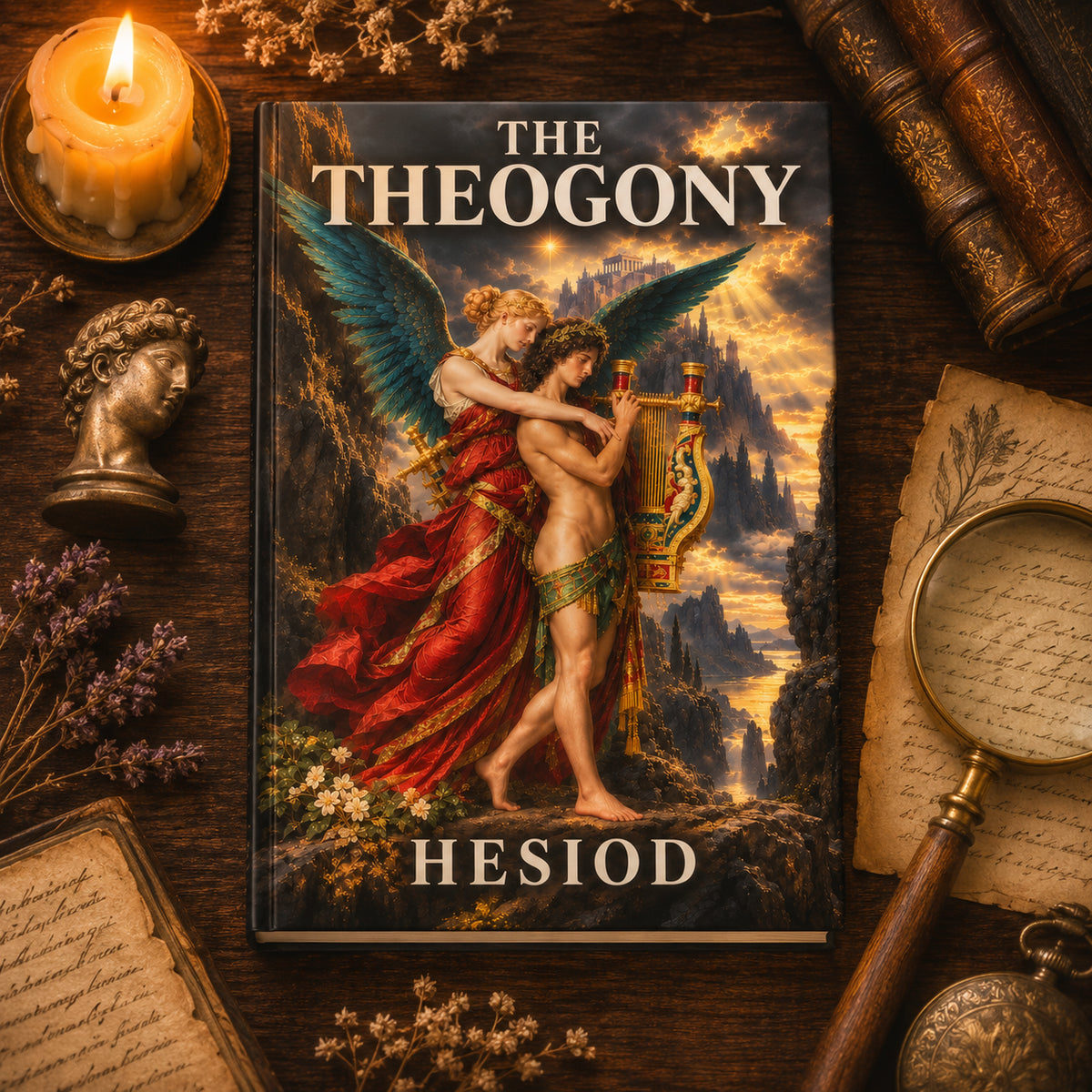
The Theogony by Hesiod


Choose options
About this book
The Theogony is an ancient Greek poem traditionally attributed to Hesiod and generally dated to around 700 BC. Its title means “the birth of the gods”, and its central purpose is to explain how the universe and its divine inhabitants came into being, how the generations of gods succeeded one another, and how the present order of the cosmos was established.
The poem opens with an invocation to the Muses of Mount Helicon, who inspire Hesiod to sing of the immortal gods. It then describes the first beings to emerge: Chaos, Earth (Gaia), Tartarus and Eros. From these primordial powers come further generations of divine beings, including Uranus, the Titans, the Cyclopes and the Hundred-Handed Ones. Through these genealogies, Hesiod brings together a wide range of myths into an interconnected account of the origins of the world.
A central theme is the succession of divine rulers. Uranus is overthrown by his son Cronus, who in turn fears the power of his own children. After swallowing them to prevent the prophecy of his downfall, Cronus is eventually challenged by Zeus. The poem recounts Zeus’s rise, the war between the Olympian gods and the Titans, and the defeat of the monstrous Typhoeus.
The later sections explore the establishment of Zeus’s authority and the relationships between gods, goddesses and mortals. Among the episodes are the stories of Prometheus and Pandora, the marriages and descendants of Zeus, and the origins of numerous divine figures, rivers, spirits and personifications.
Drawing on traditions that circulated throughout the ancient Greek world, The Theogony offers more than a collection of mythological stories. It presents an early attempt to organise the universe through divine genealogy, explaining the distribution of power and the order of the gods. Its influence can be traced through later Greek literature, religious thought and classical mythology.
Inside the book
The Theogony by Hesiod
Product Details
We ship worldwide, with print locations in the UK, USA and Canada. Our Box Sets are produced exclusively in the UK. All orders are sent fully tracked and insured. From the date your order is placed, please allow the following estimated delivery times:
UK: 10–21 working days
USA: 10–21 working days
Europe: 10–21 working days
Rest of World: 10–21 working days
Our books are printed to order, so we are unable to accept returns for change of mind except where required by applicable law. If your order arrives damaged, faulty or incorrect, please contact us and we will arrange a replacement or appropriate resolution. This does not affect your statutory rights. Please see our full Returns & Refunds Policy for further information.



First to Discover What’s Next
New collections, newly restored books, exclusive digital releases and occasional subscriber-only offers, sent directly to your inbox.