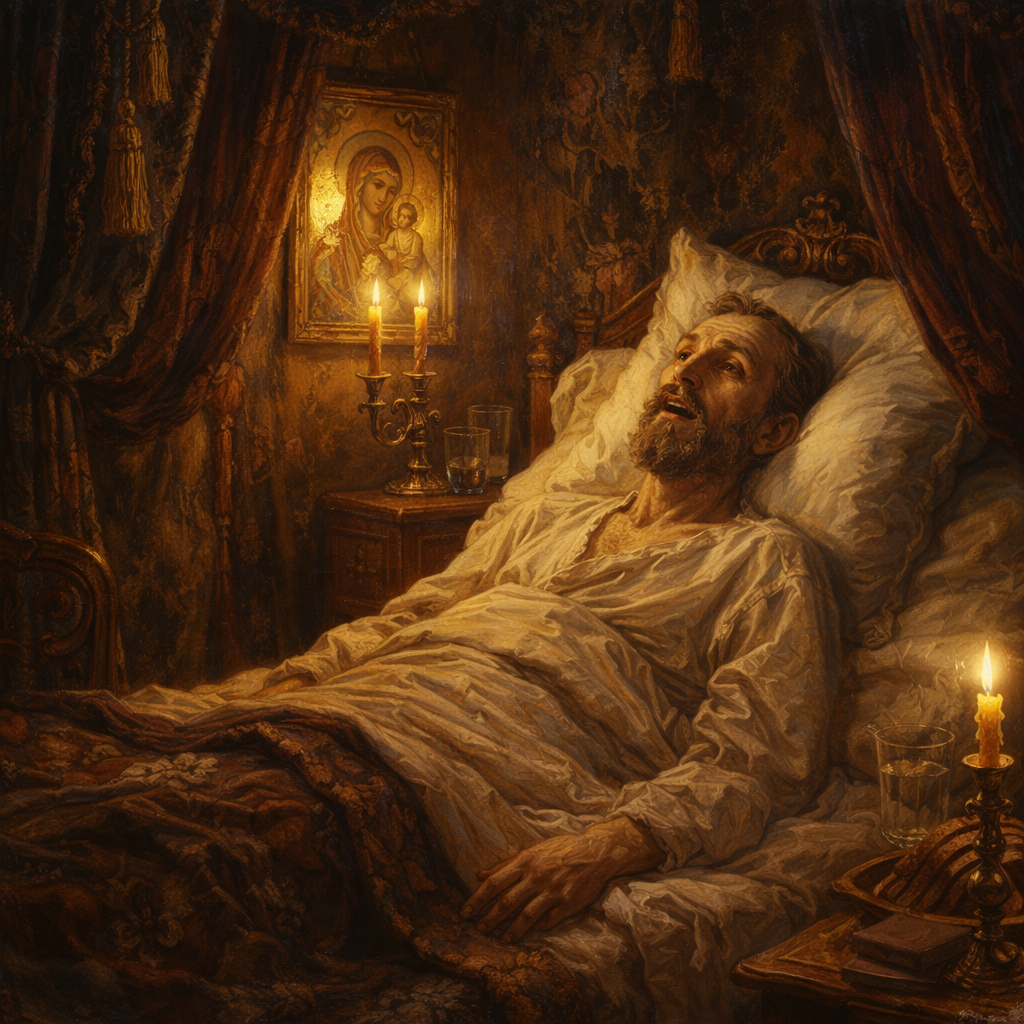
The Death of Ivan Ilyich Summary: A Clear Chapter-by-Chapter Guide
Tolstoy’s The Death of Ivan Ilyich is short, sharp, and unsettling in the best way. It reads like a polite door closing, and then you realize it has closed on your own life, too. If you have ever felt the quiet pressure to be “successful,” to look fine, to keep everything tidy and respectable while something unnamed inside you goes hungry, this novella lands with peculiar force.
This is a The Death of Ivan Ilyich summary designed to help you understand what happens, chapter by chapter, and what it means. We’ll cover the major events, the key themes, and the deeper questions Tolstoy is pushing toward, while avoiding the kind of spoilers that flatten the experience.
What Is The Death of Ivan Ilyich About?
On the surface, the book is about a well-placed Russian judge, Ivan Ilyich Golovin, who becomes ill and slowly confronts the reality of dying. But Tolstoy is not interested in illness as a medical event. He is interested in what happens when the usual distractions fall away: career, social approval, politeness, status, and routine.
It’s a story about a man who has done everything “correctly,” and then discovers that correctness does not protect you from the most basic human reckoning.
Quick Context: Why This Novella Hits So Hard
Tolstoy wrote this late in life, after a spiritual crisis and a deep moral reorientation. The result is a work that is brutally honest about self-deception, social performance, and the way a person can sleepwalk through their own days.
It’s also famously readable. No long philosophical lectures. The philosophy is woven into ordinary scenes: a drawing room, a sickbed, a conversation where nobody says what they mean.
The Death of Ivan Ilyich Chapter Summary (General Overview of Each Chapter)
Tolstoy’s novella is typically presented in twelve chapters. Here’s what happens in each, without giving away the final resolution.
Chapter 1: The News and the Performance of Grief
The story opens after Ivan Ilyich’s death. His colleagues learn the news at work, and Tolstoy immediately shows how “proper” reactions can conceal private calculations. People think about promotions, appointments, and inconvenience. At the funeral, grief exists, but it is carefully managed, almost like etiquette.
This first chapter sets the tone: the social world runs on appearances, and even death gets fitted into the schedule.
Chapter 2: Ivan’s Background and the “Correct” Life
We rewind to Ivan’s earlier life. He is competent, conventional, and ambitious in a socially acceptable way. He likes things to be orderly. He chooses a path that earns approval.
This chapter also sketches his marriage and home life in a way that feels oddly familiar: relationships treated as another part of the respectable arrangement.
Chapter 3: Career and Comfort
Ivan builds his professional identity. He takes pride in doing things “properly,” in following the rules, in being the kind of person society rewards. We see him gradually becoming more invested in comfort and status.
Tolstoy’s quiet critique here is subtle but ruthless: Ivan is not evil, he is ordinary. That is part of the point.
Chapter 4: The Accident That Is Not Just an Accident
Ivan moves to a new post and becomes absorbed in making a home that reflects his success. During a small domestic moment, he injures himself. It seems minor at first.
This is where the plot pivots. The everyday world continues, but something has shifted underneath it.
Chapter 5: Illness Creeps In
Ivan begins to feel unwell. The symptoms are vague, then persistent. He starts to sense that something is wrong, but tries to treat it the way he treats everything: logically, properly, efficiently.
He consults doctors, hoping for certainty. Instead, he meets a medical world that mirrors the social world: authority, performance, and language that keeps reality at a safe distance.
Chapter 6: Doctors, Denial, and the Fog of “It’s Fine”
The medical visits continue. Ivan is given professional attention, but not honest clarity. The doctors speak as if the question is merely technical. Ivan wants reassurance and gets procedure.
Meanwhile, his household adapts around him in a way that is disturbingly normal. People want life to continue. They want the discomfort of his illness to stay politely out of sight.
Chapter 7: Isolation Inside a House Full of People
Ivan’s suffering intensifies, and so does his isolation. His family and colleagues do not know how to be with the truth of what is happening. They avoid it, minimize it, reframe it.
Tolstoy captures a particular loneliness here: not the loneliness of being alone, but the loneliness of being surrounded and still unseen.
Chapter 8: The Only Honest Presence
A new figure becomes important: Gerasim, a young servant, who treats Ivan with simple, unembarrassed kindness. Gerasim does not perform. He helps. He stays.
This chapter matters because it introduces a contrast: genuine human presence versus social avoidance. In many readings of the book, Gerasim functions like a moral tuning fork. When he enters a scene, you can hear what is true.
Chapter 9: Anger, Bargaining, and the Mind’s Panic
Ivan’s inner world becomes more turbulent. He cycles through anger, frustration, resentment, and a kind of mental bargaining. He begins to see how other people’s refusal to acknowledge reality makes his suffering worse.
This is not just pain. It is humiliation, injustice, and the fear that his life might have been built on the wrong foundation.
Chapter 10: The Big Question: “What If My Whole Life Was Wrong?”
Here Tolstoy tightens the vise. Ivan begins to reflect on his past with a clarity he did not have when life was comfortable. He revisits choices, motivations, compromises.
This is where the novella becomes a mirror. Tolstoy is not simply describing a dying man. He’s asking the reader: what if your “normal” life is actually avoidance dressed up as success?
Chapter 11: The Threshold
Ivan’s suffering reaches a peak, and his family continues to orbit around him with varying degrees of discomfort, duty, and self-protection. There are moments of tenderness, but also moments that feel painfully empty.
This chapter is the edge of the final movement. Ivan is forced closer and closer to an honest confrontation, and it is not gentle.
Chapter 12: The Final Movement (No Spoilers)
The last chapter contains the culmination of Ivan’s inner struggle. This is the part you should read without knowing the specific emotional turn Tolstoy crafts, because it is where the novella earns its reputation.
What you can know without spoiling anything is this: Tolstoy brings Ivan to a profound reckoning with fear, selfhood, and what it means to live truthfully. The ending is not a cheap twist. It is a final illumination that reframes the whole story.
Major Themes in The Death of Ivan Ilyich
1) The Terror of an Unexamined Life
Ivan’s life looks successful from the outside, but Tolstoy shows how a life built on social approval can leave a person spiritually unprepared for reality. The “exam” comes late, and it is unforgiving.
2) Social Performance and the Lie of Politeness
One of the most haunting elements is how everyone participates in a shared pretense. People refuse to speak plainly about death, suffering, fear, and meaning. This politeness is not kindness. It is avoidance.
3) Real Suffering Versus Theories About Suffering
The doctors are not portrayed as villains. They are portrayed as part of a system that speaks around truth. Ivan suffers not only from pain, but from the emotional violence of being treated like a case rather than a human being.
4) Authentic Compassion
Gerasim’s presence shows the power of simple honesty. No speeches. No philosophy. Just care, directness, and the willingness to remain near discomfort without turning away.
5) Mortality as a Spiritual Mirror
Tolstoy treats death as a kind of revelation: it strips life down to what it actually was. Not what you said it was. Not what you posted, performed, or proved. What it truly contained.
What Is the Meaning of The Death of Ivan Ilyich?
If you want a single sentence: Tolstoy argues that a life built on appearances can collapse into terror when confronted with death, and that truth and compassion are the only real antidotes.
But it’s richer than a moral lesson. The novella asks uncomfortable questions:
-
What if the “right” life is not the real life?
-
What if success is a socially approved form of sleepwalking?
-
What happens when you can no longer distract yourself?
Tolstoy is not trying to depress you. He’s trying to wake you up. There’s a strange mercy in that.
Why This Book Still Feels Modern
People often assume a 19th-century Russian novella will feel distant. This one does not. Ivan’s world is full of status anxiety, career politics, curated appearances, and shallow reassurance. That is not a historical curiosity. That is Tuesday.
And the emotional core is timeless: the fear that you might reach the end and realize you never truly lived.
If You’re Reading This for School or a Book Club
Here are a few discussion questions that work well without spoiling anything:
-
Where do you see “performative living” in Ivan’s choices?
-
Which characters feel most honest, and why?
-
What does Tolstoy suggest about modern ideas of success?
-
How does the social world respond to discomfort and mortality?
Final Note
A summary of The Death of Ivan Ilyich will only take you so far. It can help you follow the plot, remember the chapters, and spot the major themes, but it can’t replicate the experience Tolstoy builds line by line: the tightening of ordinary life into something unbearable, the small social evasions that start to feel sinister, and the private questions that get louder the longer you sit with them.
If you read The Death of Ivan Ilyich quickly, it can seem like a story about dying. If you read it carefully, it becomes a story about how people avoid living, and what it costs them. If you’re even slightly curious, don’t stop at the summary. Read the novella itself, then come back and see what changed in how you think about your own “normal” days. And if you’d like a clean, beautifully produced edition, you can buy it HERE

Written by Steve Travels